
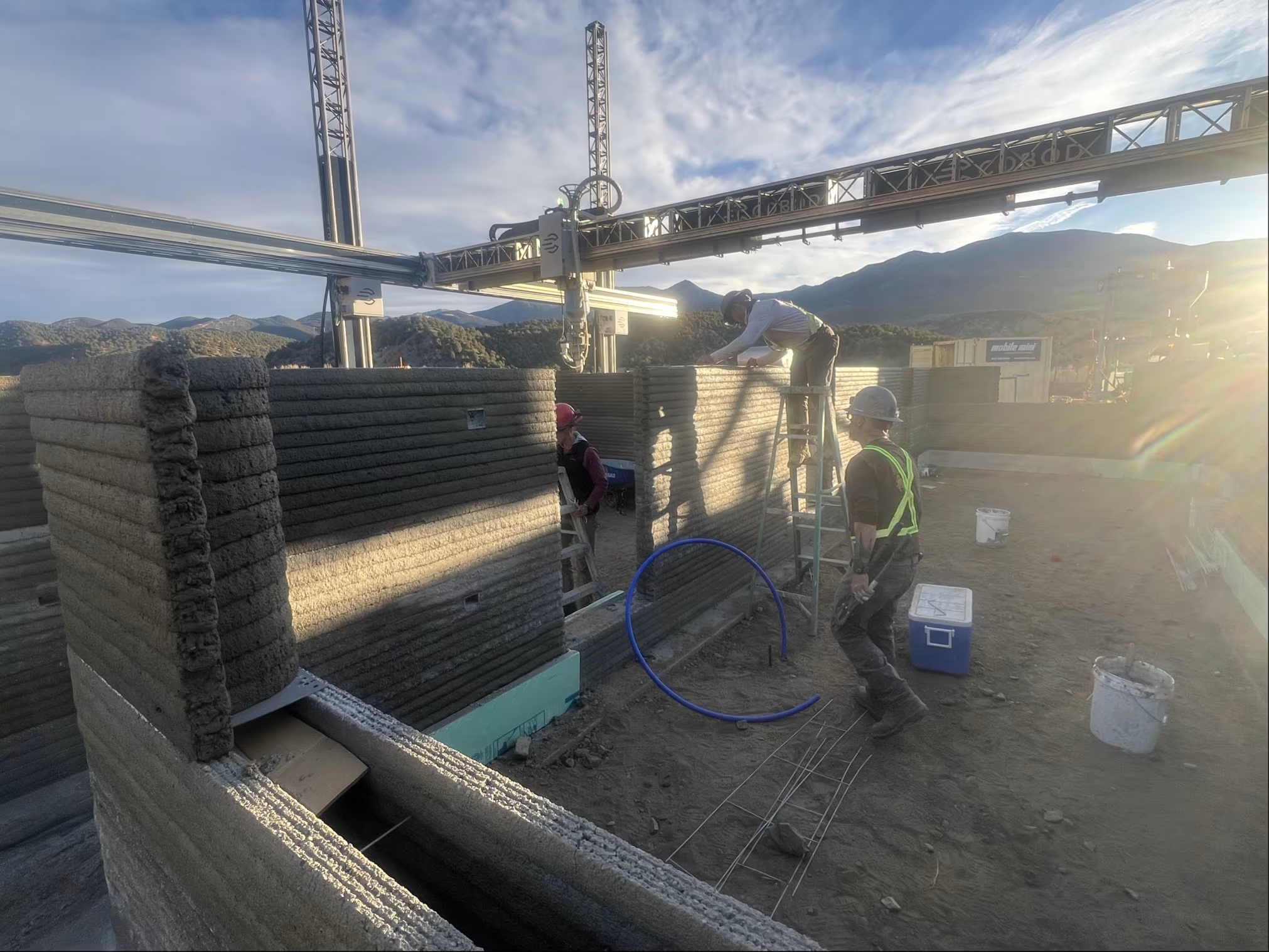
The debate between 3D-printed construction and traditional wood framing is not really about which method is better in an absolute sense. It is about which method is better for a specific project, in a specific place, under specific conditions. Both approaches have genuine strengths, and the most useful question is not which one wins — it is which one fits.
Understanding that distinction is part of how VeroTouch thinks about where to deploy additive construction and where other approaches still make sense.
What Traditional Framing Does Well
Wood-frame construction has been the dominant method in residential building for good reason. It is flexible, widely understood, and supported by a deep contractor network. Design changes mid-project are manageable. Additions and modifications are relatively straightforward. The supply chain is mature, and most building inspectors and permitting offices are familiar with the process.
For custom homes with complex geometries, highly individualized layouts, or sites that require frequent design adaptation, traditional framing offers a responsiveness that is hard to replicate with automated construction. It also excels where local labor markets are strong and where the economics of robotic deployment do not yet pencil out.
Where 3D Printing Changes the Equation
Additive construction earns its advantages in different conditions. When speed matters — as it does in post-disaster rebuilding, high-demand housing markets, or communities trying to close a housing gap quickly — the ability to print a superstructure in days rather than weeks is a meaningful difference. Automation also reduces dependence on skilled trade labor, which is increasingly scarce in many parts of the country.
Material choice is another factor. VeroTouch's 3D-printed homes use concrete walls that are noncombustible, which gives them a structural advantage over wood framing in fire-prone regions. That is not a small consideration in states like Colorado, where wildfire risk is embedded in the landscape and long-term resilience matters as much as upfront cost.
The Role of Site and Climate
Construction method and climate risk are increasingly linked. In mountain communities, coastal zones, and other areas facing repeated natural hazard exposure, material durability has direct financial and human consequences. A home that performs well in ordinary conditions but fails under extreme stress is not actually a good value proposition.
3D-printed concrete walls are not vulnerable to combustion in the way wood studs are. They do not rot, they resist moisture intrusion differently, and they do not provide a fuel source during a wildfire event. For projects in high-risk zones, those properties shift the calculus significantly. Traditional framing can be detailed to reduce some of those vulnerabilities, but it starts from a different baseline.
Scale and Repetition Favor Automation
One area where additive construction consistently outperforms is in projects with repetitive unit types. Multifamily housing, workforce housing developments, and community-scale builds all benefit from the efficiency gains of automated construction. Once the design is set, the marginal cost of printing additional units drops. That is the opposite of traditional framing, where labor costs tend to scale linearly with units built.
VeroTouch's work in Buena Vista demonstrated this at a community scale. The ability to deliver multiple homes quickly, with consistent quality, using a smaller crew than conventional construction would require — that is where the technology shows its clearest advantage.
Not an Either/Or Question
The more honest framing is that 3D printing and traditional construction are not in direct competition for every project. They serve different conditions well. The job of a thoughtful builder is to match method to context: to ask where automated concrete construction delivers real advantages and where conventional framing still makes the most sense.
What VeroTouch is building toward is not a world where one method replaces the other entirely, but one where builders have better tools to match construction approach to project reality. In wildfire country, in high-demand markets, and in communities that need housing fast without sacrificing durability, that match increasingly points toward additive construction.
